The Five Drivers of Independence
Understand. Strengthen. Educate. Empower. Grow.
Five connected pillars that guide every decision within the Abilities Blossom Independence Model™.
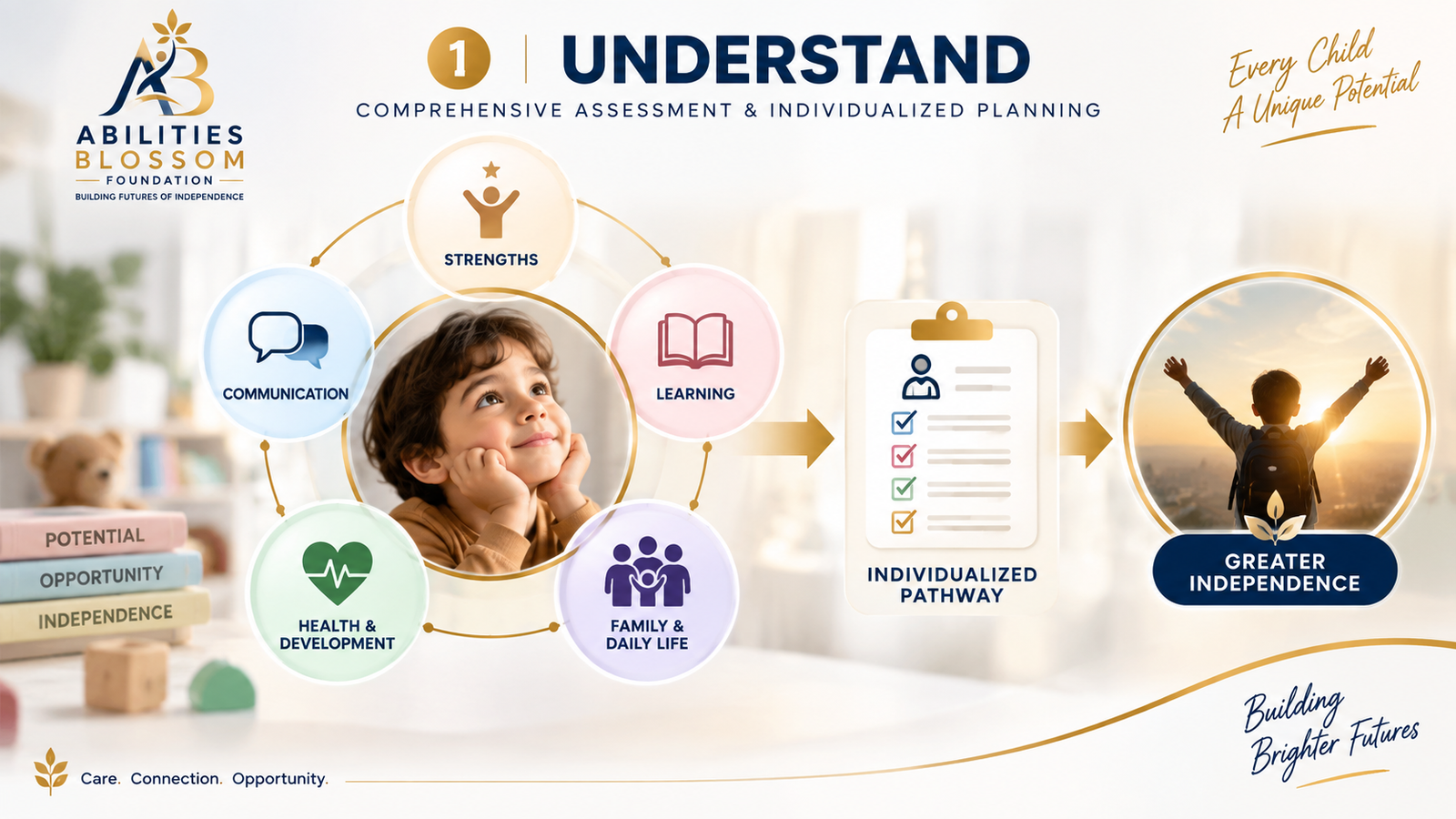
1. Understand
Comprehensive Assessment & Individualized Planning
Every child is more than a diagnosis.
We begin by understanding the whole child—their strengths, needs, abilities, communication, learning profile, development, health considerations, interests, daily environment, and family priorities.
This understanding brings together the perspectives of families and relevant professionals. Where appropriate, specialized assessments can provide additional insight and contribute to evidence-informed, individualized planning.
But understanding a child is not only about identifying needs. It is also about recognizing strengths, possibilities, priorities, and potential.
These insights become the foundation for an individualized pathway, with meaningful goals that can evolve as the child grows and develops.
"What diagnosis does this child have?"
"Who is this child, and what do they need to move toward greater independence?"
Understand the Child. Then Build the Pathway.
2. Strengthen
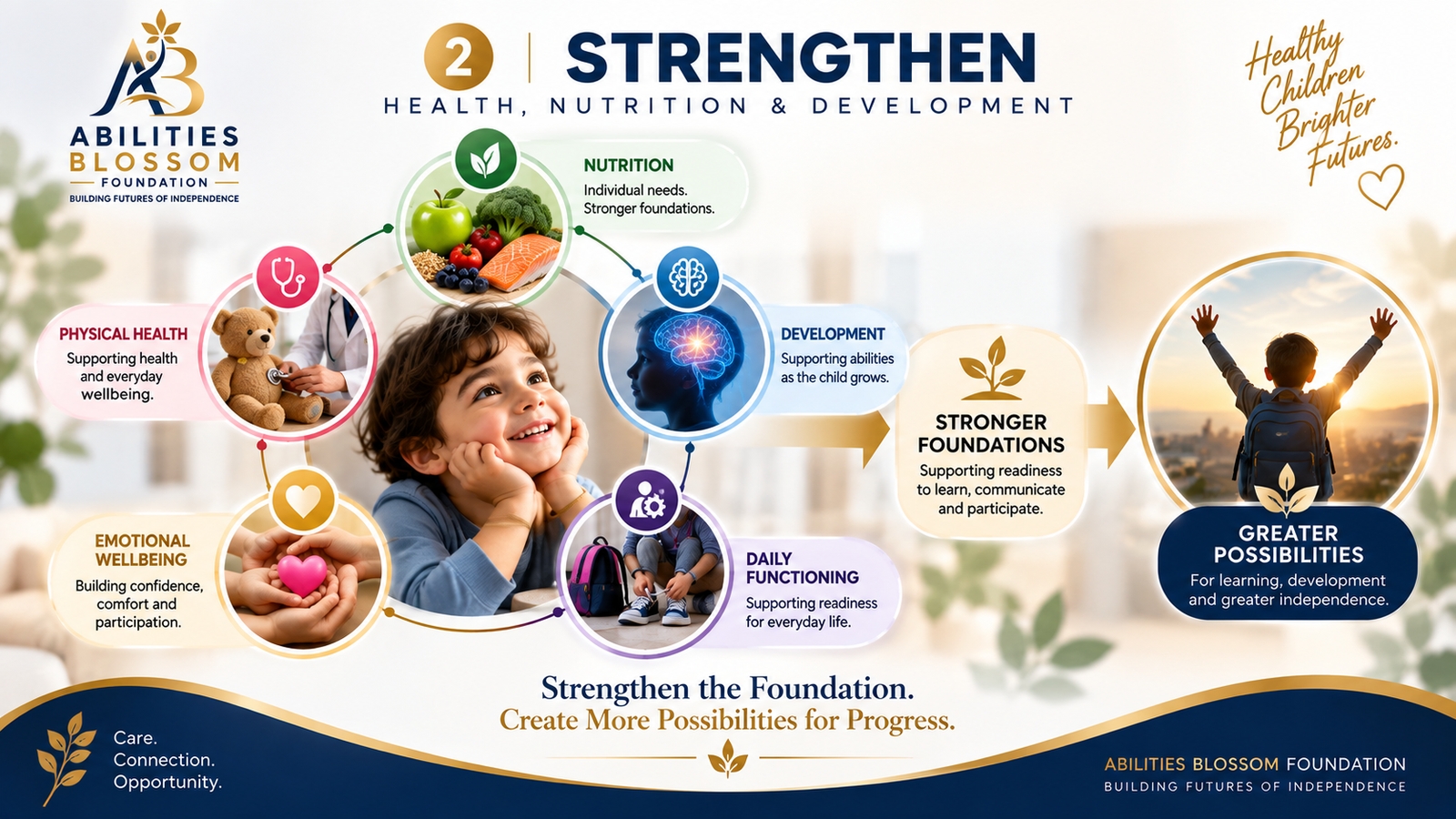
Health, Nutrition & Development
A child's ability to learn, communicate, participate, and develop cannot be viewed separately from their overall health and well-being.
We consider the whole child, recognizing the connections between physical health, nutrition, development, emotional well-being, daily functioning, and readiness to learn.
Working alongside qualified healthcare and developmental professionals, relevant information can be brought together to help identify individual needs, priorities, and appropriate areas of support.
Where appropriate, health, nutritional, and developmental considerations can become part of the child's individualized pathway—working alongside education and family partnership rather than as separate services.
The purpose is not to search for a single solution. It is to understand and strengthen the foundations that may help each child participate more fully, develop their abilities, and make meaningful progress.
"How can we help this child learn?"
"What does this child need to be ready to learn, participate, develop, and thrive?"
Strengthen the Foundation. Create More Possibilities for Progress.
3. Educate
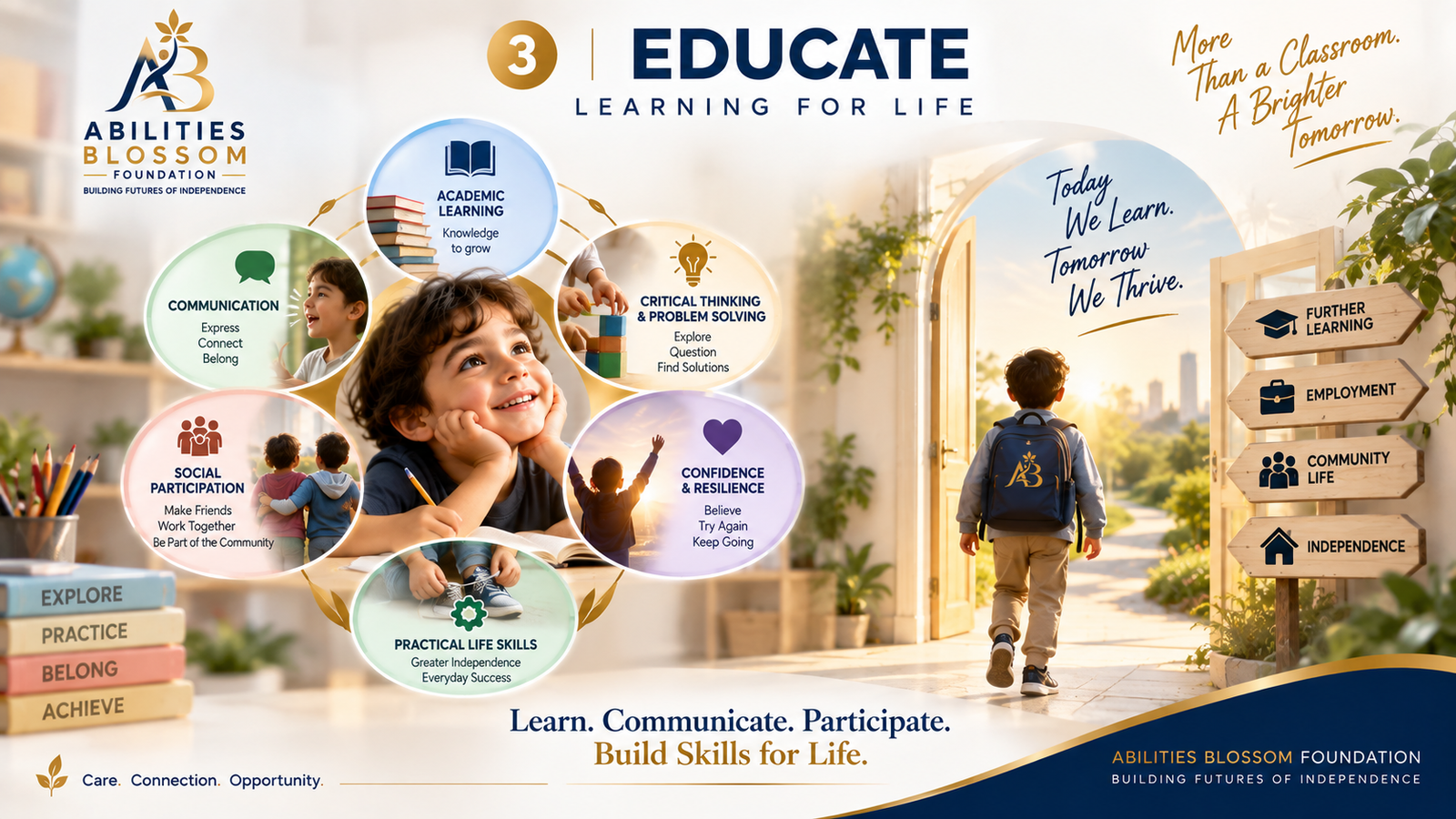
Learning for Life
Learning is not only about completing lessons, passing examinations, or reaching academic milestones.
We see education as a pathway for developing the knowledge, abilities, confidence, and practical skills children can use throughout their lives.
Our educational approach is designed around the individual learner, combining appropriate academic learning with opportunities to strengthen communication, critical thinking, social participation, emotional resilience, problem-solving, and everyday life skills.
Children should have opportunities to discover their strengths, participate meaningfully, make choices, solve problems, build relationships, and gradually take greater responsibility for themselves.
Progress therefore means more than academic achievement. It can also be seen in a child's growing ability to communicate, participate, apply what they learn, navigate everyday situations, and become more confident in what they can do.
Education should not define children by what they find difficult. It should help them discover what they can learn, what they can contribute, and what may become possible.
We do not educate only for the next exam.
We educate for the next stage of life.
Learn. Communicate. Participate. Build Skills for Life.
4. Empower
Families as Partners
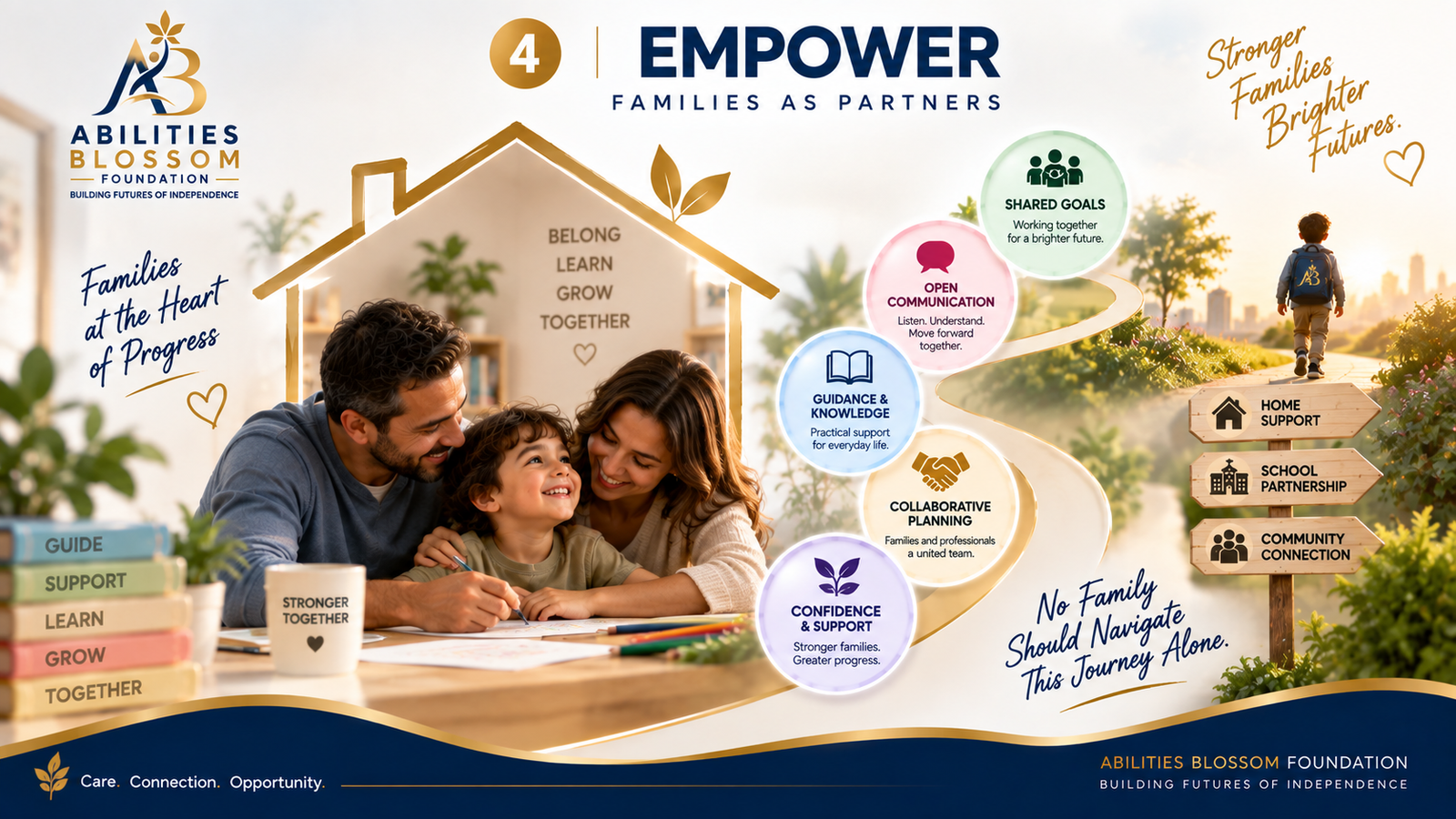
Families are not observers. They are essential partners.
Families know their children in ways no professional ever can. They understand their child's routines, communication, preferences, challenges, strengths, and everyday experiences. That knowledge should be an active part of planning and decision-making throughout the child's journey.
Our approach brings families and professionals together through shared goals, practical guidance, ongoing communication, collaborative planning, and opportunities to build knowledge and confidence.
Support should not stop when a therapy session ends or when a child leaves the classroom. By helping families understand strategies and apply appropriate approaches in everyday life, learning and development can be supported across home, school, and community environments.
Partnership also means listening. Families should feel heard, respected, informed, and able to contribute meaningfully to decisions affecting their child.
The goal is not to turn parents into therapists or teachers. It is to give families the knowledge, confidence, and partnership they need to support their child while remaining what matters most—their family.
No Family Should Have to Navigate This Journey Alone.
When families and professionals share knowledge, goals, and responsibility, the child is surrounded by a more connected circle of support.
Listen. Partner. Empower. Grow Together.
5. Grow
Preparing for Adult Life
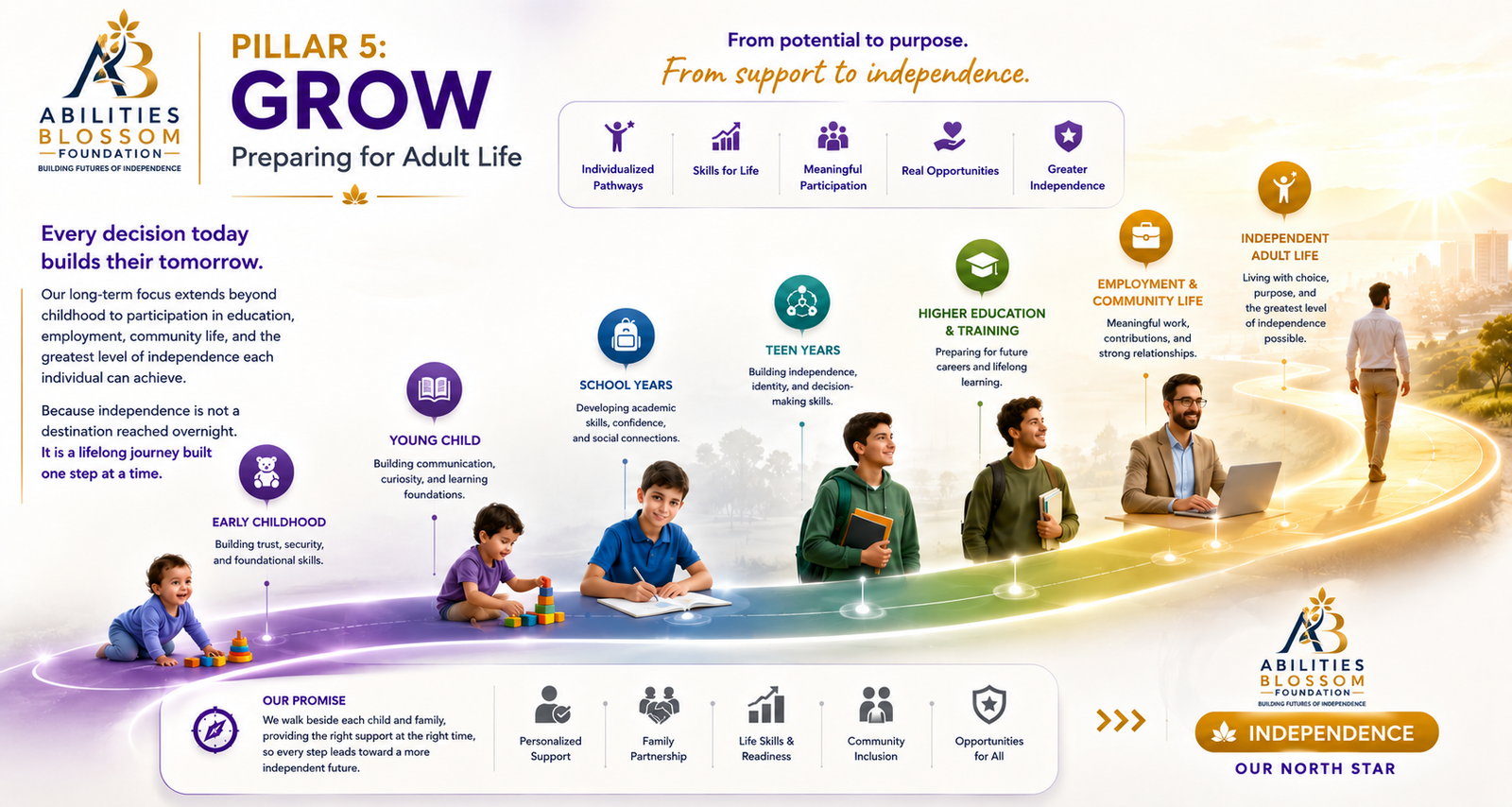
Childhood is one part of a much longer journey.
As children grow, their goals, responsibilities, environments, and opportunities change. Our model therefore looks beyond the next lesson, therapy session, or academic year and considers the abilities each child may need for the future.
Preparation for adult life begins gradually—by strengthening choice, communication, self-advocacy, practical life skills, social participation, responsibility, and confidence throughout the child's development.
As each individual grows, the pathway can evolve toward further education, vocational development, employment opportunities, community participation, relationships, and everyday living.
The future will look different for every person. Independence does not mean that everyone must live or work without support. It means helping each individual develop their abilities, exercise greater choice, participate meaningfully, and achieve the greatest level of independence possible for them.
We Are Preparing Them to Participate in Life Beyond It.
Every skill developed today can become another building block for tomorrow.
Build Skills. Expand Choices. Create Pathways for Life.